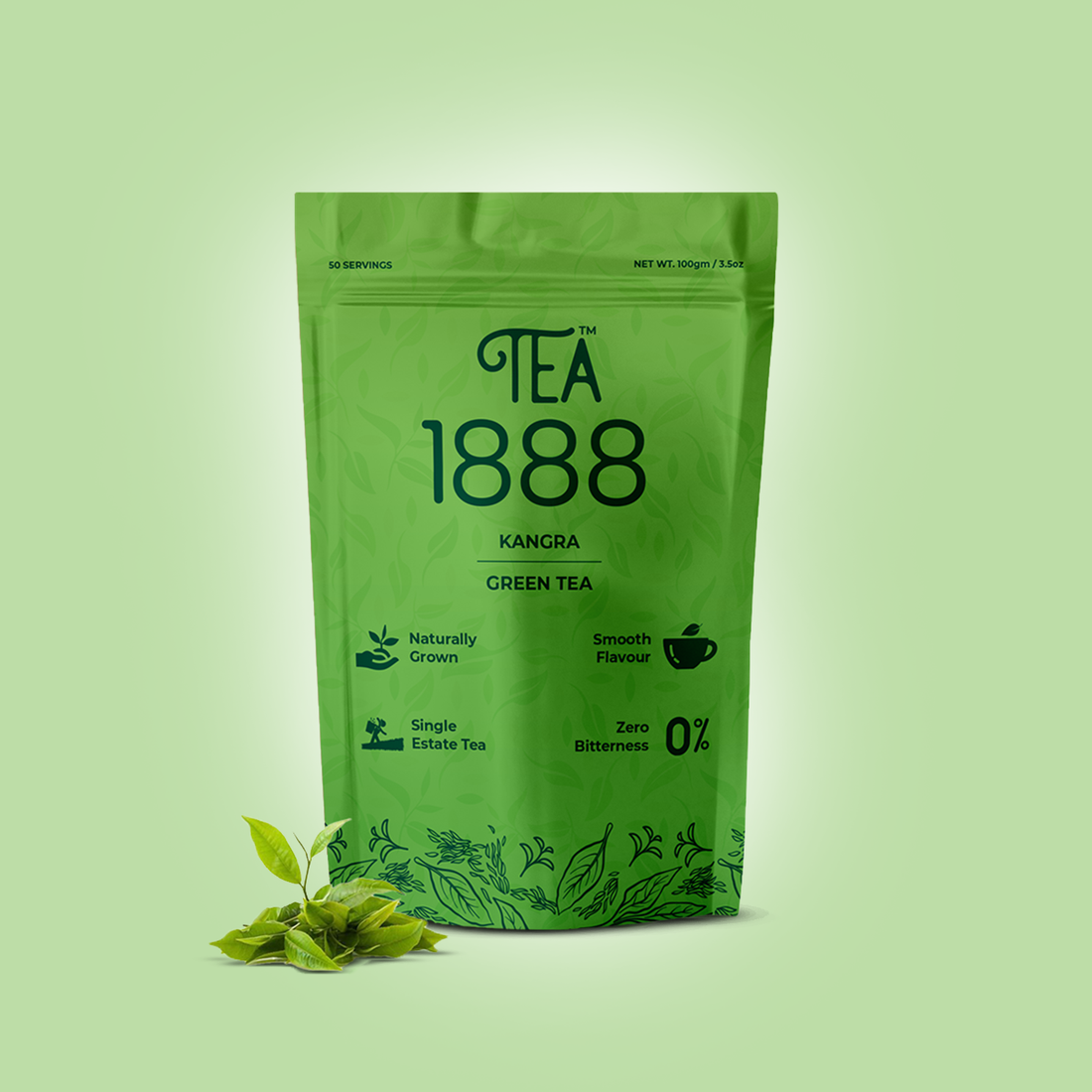


Ever wondered about a hidden gem among Indian teas that rivals the famous Darjeeling? Kangra green tea, grown in India's smallest tea region, is a remarkable alternative that deserves your attention. This exceptional Himalayan brew has a fascinating history and distinctive character that tea lovers can't ignore, despite its small growing area.
The tea's unique quality comes from Hybrid China tea shrubs, making it different from other Indian teas. Kangra valley green tea tastes smoother and is nowhere near as astringent as other Indian varieties. You'll notice subtle hints of woodiness, nuttiness, and vegetal notes that create a fantastic taste experience. Green tea comes from unoxidized tea leaves and contains antioxidants like EGCG. The Kangra variant has many more unique traits that make it stand out from similar teas.
This tea's historical significance adds to its charm. The Gazetteer of the Kangra District noted at the time of 1883 that the region's tea was "probably superior to that produced in any other part of India". Tea farming expanded to more than 9,000 acres of land by 1892. A devastating earthquake in 1905 hit the industry hard, but Kangra tea bounced back strongly. The tea earned its Geographical Indication status in 2005. Each sip of this tea brings together centuries of tradition with the unique Himalayan terroir.

The unique geography of Kangra Valley
The Kangra Valley lies in the foothills of the mighty Dhauladhar mountains in Himachal Pradesh. This stunning region, known as "The Valley of Gods," produces exceptional green tea thanks to its unique geography. At elevations of 900 to 1,400 metres above sea level, the valley provides perfect growing conditions for tea. The microclimate here features annual rainfall between 270-350 cm, and temperatures range from 13-35°C during the March-October growing season. These conditions allow tea leaves to ripen slowly and develop complex flavours.
The valley's soil characteristics shape its tea's distinctive profile. Rich organic matter and excellent drainage in the acidic soil provide the nutrients that make Kangra tea special. The cool air from nearby snow-capped mountains adds to the tea's quality.
What makes Kangra green tea unique among Indian teas is its exclusive use of China or China-hybrid tea bushes. Many gardens still maintain china bushes that are over 150 years old. The first flush produces tea with unmistakable fruity notes. In contrast, the green tea variety gives off a subtle woody aroma that delights tea enthusiasts. This combination of perfect growing conditions has made Kangra one of India's smallest yet most prestigious tea regions. The valley produces about 899,000 kilogrammes annually from roughly 5,900 gardens spread across 2,312 hectares of land.
A brief history of Kangra green tea
Dr Jameson, superintendent of the Botanical Tea Gardens, discovered the perfect region for tea cultivation in 1849. The first commercial plantation started near Palampur in 1852, and this marked the beginning of Kangra tea's remarkable story. Kangra green tea gained worldwide recognition in the late 19th century. It won gold and silver medals at exhibitions in London and Amsterdam between 1886 and 1895. The Kangra District Gazette praised it in 1882, calling it "superior to that produced in any other part of India". The devastating Kangra earthquake of 1905 changed the tea's destiny. The catastrophe killed thousands of people, destroyed tea factories, and made many British planters abandon the valley. The once-thriving industry almost collapsed when local Indians took over, but it didn't have enough resources to rebuild.

World War I brought more challenges as labour shortages hurt production. The Indo-Pak conflicts of 1965 and 1971 later cut off important markets in Afghanistan. The tea's revival started showing promise after these setbacks. It earned Geographical Indication status in 2005. The European Union granted Protected Geographical Indication status in 2023, creating new possibilities for this unique Himalayan brew in European markets.
How Kangra green tea compares to Darjeeling
Kangra green tea stands out with several distinct advantages over the prominent Darjeeling variety. The health benefits are impressive - Kangra green tea contains by a lot higher levels of polyphenols and antioxidants. Research shows that Kangra green tea has higher amounts of epigallocatechin-3-gallate compared to Northeast Darjeeling tea. The taste profile sets it apart, too. Kangra green tea delivers a milder character with more body and liquor than its Darjeeling counterpart. Tea experts often point out that Kangra tea feels markedly smooth and less astringent. You'll notice subtle hints of woodiness, nuttiness, and delicate vegetal notes. The varieties showcase a green, vegetal aroma that flows into the taste, along with a pleasant, understated pungency.

There's another reason to choose Kangra green tea - its caffeine content. The tea contains lower caffeine levels (20-30mg per cup) compared to Darjeeling tea (40-60mg). This makes it perfect to drink if you want to cut down on caffeine while enjoying quality tea. The tea's appearance adds to its charm. Kangra tea looks paler, but leaves a sweet aftertaste that many people love. In fact, the tea's rich antioxidant profile makes it a great choice to fight chronic diseases, boost immunity, and help with weight management.
Conclusion
Kangra green tea is evidence of India's rich tea heritage, yet many tea enthusiasts worldwide haven't found it yet. This exceptional brew from the Dhauladhar mountain foothills gives you more than just great taste. It has many health benefits that surpass its more famous counterparts. The Kangra Valley's unique geography shapes this tea's character. You'll find a perfect mix of elevation, rainfall, temperature, and soil that creates a one-of-a-kind brew. The region even has 150-year-old Chinese bushes that still produce remarkable leaves.
Earthquakes and market problems couldn't stop Kangra green tea's growth. The European Union's Protected Geographical Indication status now backs what tea experts have known since the 1800s - this Himalayan brew deserves worldwide recognition. The tea's health benefits make it truly special. It packs more polyphenols and antioxidants than other Indian teas, which health-conscious people will love. On top of that, it has less caffeine, so you can drink several cups daily without worrying about sleep or jitters.

Looking for a new tea experience? Give Kangra green tea a spot in your collection. Its smooth, less bitter profile with subtle woody notes and sweet undertones might make you switch from other varieties. This hidden gem from India's smallest tea region isn't just another alternative to Darjeeling - it's an extraordinary tea that stands on its own.
Key Takeaways
Discover why Kangra green tea from India's smallest tea region offers superior health benefits and unique flavour characteristics that make it a compelling alternative to the more famous Darjeeling variety.
- Kangra green tea contains significantly higher levels of polyphenols and antioxidants than Darjeeling, with lower caffeine content (20-30mg vs 40-60mg per cup)
- The unique Himalayan terroir at 900-1,400 metres elevation creates ideal growing conditions, producing tea with subtle woody, nutty notes and less astringency
- Despite devastating setbacks from the 1905 earthquake, Kangra tea has earned prestigious recognition, including EU Protected Geographical Indication status in 2023
- This hidden gem grows exclusively from China-hybrid bushes, some over 150 years old, making it distinctly different from other Indian teas
- The smooth, mild character with delicate vegetal notes and sweet aftertaste makes Kangra green tea perfect for multiple daily servings without sleep disruption
Kangra green tea represents centuries of tradition combined with exceptional health benefits, offering tea enthusiasts a remarkable alternative that deserves recognition alongside India's most celebrated varieties.
FAQs
Q1. What makes Kangra green tea unique compared to other Indian teas? Kangra green tea is grown in the Himalayan foothills, offering a smoother, less astringent flavour with subtle woody and nutty notes. It's cultivated from China-hybrid bushes, some over 150 years old. It boasts higher levels of antioxidants than many other Indian teas.
Q2. How does Kangra green tea compare to Darjeeling tea in terms of health benefits? Kangra green tea contains higher levels of polyphenols and antioxidants compared to Darjeeling tea. It also has lower caffeine content, making it a healthier option for those looking to reduce their caffeine intake while still enjoying the benefits of tea.
Q3. What is the history behind Kangra green tea? Kangra tea cultivation began in 1849 and quickly gained international recognition. Despite setbacks from a devastating earthquake in 1905, it has persevered and recently received Protected Geographical Indication status from the European Union, acknowledging its unique character and quality.
Q4. How does the geography of Kangra Valley contribute to its tea production? The Kangra Valley's elevation (900-1,400 metres), abundant rainfall, cool climate, and acidic soil create ideal conditions for tea cultivation. These factors contribute to the tea's distinctive flavour profile and high antioxidant content.
Q5. Why is Kangra green tea considered a hidden gem in the tea world? Despite its exceptional quality and unique characteristics, Kangra green tea remains relatively unknown compared to other Indian teas. Its smooth flavour, health benefits, and rich history make it a remarkable discovery for tea enthusiasts seeking something beyond the usual varieties.